24/7 Qilin Ransomware Incident Response Services
24/7 Emergency Hotline: 1 (833) 562-5273
This page is a defender-focused guide to Qilin-style ransomware response—high-level TTPs, realistic timelines, MITRE-mapped behaviors, and practical scoping/containment steps. We keep the guidance operational and safe (not “how to hack”). If you’re actively impacted, do not go it alone—containment mistakes can destroy evidence, increase downtime, or leave persistence behind.
Related Incident Response And Ransomware Resources
This is a curated hub for the pages most commonly used during ransomware response. Deeper links also appear inside sections where they matter.
- Important disclaimer & safe-use notice
- What Qilin-style ransomware response means
- First hour actions (what to do, what not to do)
- Typical Qilin-style attack chain (defender view)
- High-level TTPs & behavioral patterns (MITRE mapped)
- Redacted but realistic incident timeline examples
- High-signal indicators (behavioral + select technical)
- How Qilin commonly gains initial access
- Payloads and post-exploitation capabilities (high level)
- Forensics & scoping approach (what we collect)
- Recovery & post-incident hardening
- Industries commonly impacted
- FAQ
- 24/7 Qilin help
Important Disclaimer And Safe-Use Notice
Every environment is different. Response actions can have unintended consequences. Following generalized guidance without qualified support can increase downtime, destroy evidence needed for insurance or legal, or leave persistence in place. If you are actively impacted, we strongly recommend engaging professional incident response.
What Qilin-Style Ransomware Response Means
“Qilin” is commonly referenced as a ransomware operation/brand. In real-world response, the most reliable approach is to focus on intrusion behaviors and repeatable phases, because tooling, infrastructure, and payload details change quickly. Your response goal is to: contain access paths, build a defensible timeline, remove persistence, and recover safely without triggering re-encryption or losing evidence.
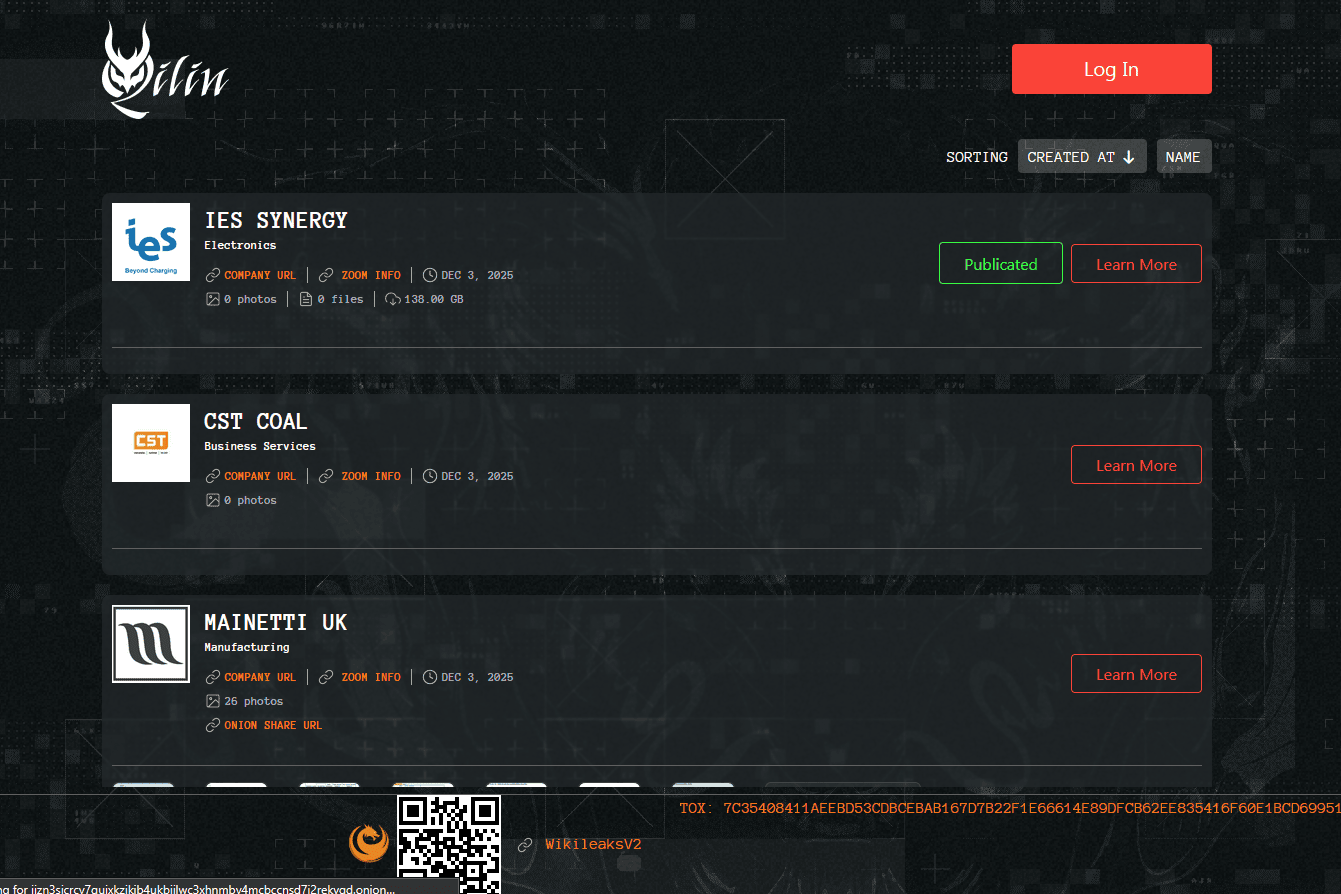
Executive reality: why this becomes expensive
Modern ransomware is typically intrusion + data theft + extortion + encryption. Even if you restore systems, data exposure risk may remain, and attackers may retain access if the entry path is not closed. The cost often comes from downtime, investigation scope, legal/insurance workflows, and trust repair.
Defender reality: what wins incidents
Fast containment of identity and remote access, disciplined evidence preservation, and a timeline built from identity + endpoint + network telemetry. The earlier you disrupt privilege escalation and lateral movement, the lower the blast radius.
First Hour Actions (What To Do, What Not To Do)
The first hour is where organizations either contain the event cleanly—or accidentally expand downtime and destroy key evidence. Below is a defender-safe checklist used to stabilize incidents.
What to do (stabilize and preserve)
- Start an incident log: timestamps, who did what, and why (critical for insurance/legal).
- Preserve evidence first: keep copies of ransom note(s), a few encrypted samples, and earliest alert timestamps.
- Contain access paths: focus on identity (IdP sessions), remote access (VPN/RDP), and admin tooling.
- Protect backups and virtualization: restrict access immediately; monitor for deletion/tampering attempts.
- Coordinate changes: reduce “random clicking” that breaks the timeline.
What NOT to do (common mistakes)
- Don’t wipe systems first: you’ll destroy the trail that proves entry point and scope.
- Don’t globally reset everything blindly: it can break services, increase downtime, and still miss persistence.
- Don’t re-enable compromised remote access: attackers often return through the same path.
- Don’t restore before scoping: restoring into an environment with active access can cause re-encryption.
- Don’t negotiate from compromised systems: keep comms isolated and controlled.
Typical Qilin-Style Attack Chain (Defender View)
The exact tools vary by affiliate and campaign. The sequence below is intentionally written at a defender’s operational level—what you can observe, where to look, and how phases connect.
Phase 1: Initial access
Commonly: stolen credentials, exposed remote services, phishing-led credential capture, third-party access, or exploitation of internet-facing applications. Defender focus: identify the first confirmed access timestamp, source IP / device, and the account or service used.
Phase 2: Privilege and foothold strengthening
Privilege changes, new admin roles, persistence mechanisms, and credential/token reuse. Defender focus: correlate identity logs with endpoint telemetry and unusual admin actions.
Phase 3: Discovery and lateral movement
Rapid enumeration of hosts, file shares, virtualization, backup infrastructure, and high-value data stores. Defender focus: bursts of authentication across many hosts, remote execution at scale, and abnormal admin tooling patterns.
Phase 4: Data staging and extortion prep
Compression bursts, bulk file operations, abnormal outbound transfers, and unusual cloud storage usage. Defender focus: large egress events + staging indicators near privileged sessions.
Phase 5: Impact
Encryption deployment, policy tampering, backup access attacks, and ransom note delivery. Defender focus: stop spread, isolate segments, preserve early impacted hosts for imaging and timeline reconstruction.
Phase 6: Negotiation and pressure
Extortion communications, proof-of-data claims, pressure deadlines, and sometimes additional disruption. Defender focus: validate claims from evidence; manage communications and decision workflows safely.
High-Level TTPs And Behavioral Patterns (MITRE Mapped)
The most reliable response playbooks prioritize behaviors over one-off indicators. Below are common ransomware patterns defenders map to MITRE ATT&CK tactic families. Specific tools and IOCs change fast. Behaviors persist.
Initial access and execution
Watch for unusual remote logins, suspicious authentication sequences, and administrative execution outside normal change windows. Focus on newly observed remote access paths, “first-seen” devices, and unexpected interactive logins by service accounts.
MITRE mapping: Initial Access, Execution
- New remote access sessions from unfamiliar device fingerprints
- Abnormal authentication sequences (impossible travel, MFA anomalies)
- Admin tooling execution on endpoints that normally never run admin workflows
Persistence and privilege escalation
Ransomware operators need reliable access and elevated control before impact. Hunt for “privilege shifts” and “new persistence,” not single hashes.
MITRE mapping: Persistence, Privilege Escalation
- New privileged group memberships / role assignments (including cloud roles)
- New scheduled execution patterns, services, or remote management configurations
- Policy drift: MFA/Conditional Access/EDR exclusions or agent tamper changes
Credential access and discovery
Credential access is the bridge from “one system” to “enterprise-wide.” Discovery identifies AD, backups, hypervisors, shares, and sensitive data stores.
MITRE mapping: Credential Access, Discovery
- Suspicious authentication to domain controllers and identity infrastructure
- Rapid directory and share discovery patterns from non-admin endpoints
- Service account anomalies: interactive logins or new usage paths
Lateral movement and command & control
Lateral movement shows up as bursts: remote execution at scale, new remote service creation, and “admin auth spray” across many hosts. C2 blends into normal encrypted traffic—correlation matters.
MITRE mapping: Lateral Movement, Command and Control
- Remote execution patterns at scale (host-to-host bursts)
- Unusual admin authentication to many servers in a short window
- New outbound destinations, new geographies, or new “always-on” beacons
Defense evasion
Many ransomware intrusions include attempts to reduce visibility: logging changes, EDR exclusions, tampering, or disabling security services. These are often high-confidence early warnings.
MITRE mapping: Defense Evasion
- Security tooling policy changes you didn’t authorize
- Agent health drops correlated with privileged sessions
- Log retention/config changes or sudden gaps in telemetry
Exfiltration and impact
Extortion cases often include staging and egress before encryption. Impact includes encryption deployment plus actions that disrupt recovery (backup targeting, virtualization disruption, mass file operations).
MITRE mapping: Exfiltration, Impact
- Compression bursts + bulk file operations near privileged sessions
- Abnormal outbound transfers to new endpoints or storage services
- Signs of recovery destruction: backup access attempts, unusual admin changes
Redacted But Realistic Incident Timeline Examples
These examples are redacted and generalized to show how events typically unfold. The goal is to help defenders recognize “where they are” in the intrusion lifecycle and choose the safest next actions.
Timeline A: “Fast mover” (hours to impact)
T+00:00 suspicious remote login + immediate privileged activity.
T+00:30 bursts of authentication to multiple servers; remote execution artifacts appear.
T+01:30 backup/virtualization access attempts; security tooling policy drift.
T+03:00 mass file operations begin; encryption deployment observed on shares.
T+04:00 extortion note delivered; negotiation pressure begins.
Defender win condition: stop identity sessions and remote execution before the “burst” becomes enterprise-wide.
Timeline B: “Slow burn” (days to impact)
Day 1 initial access and low-noise discovery on a subset of systems.
Day 2–3 privilege escalation + persistence + service account abuse patterns.
Day 4 data staging indicators; compression bursts; abnormal outbound transfers.
Day 5 recovery destruction prep (backup targeting, hypervisor interest).
Day 6 coordinated encryption event + extortion communications.
Defender win condition: catch the privilege/persistence phase—before staging and recovery destruction.
High-Signal Indicators (Behavioral + Select Technical)
The most durable indicators are behavioral. Some technical indicators can help, but they age out quickly. Use the list below to guide triage and hunting, and use case-specific evidence (notes, samples, alerts) to refine.
Identity indicators
- New privileged role assignments or group membership changes
- New MFA enrollment patterns or Conditional Access changes
- Service accounts showing interactive login behavior
- Session/token anomalies (sudden device changes, risky sign-ins, impossible travel)
Endpoint / server indicators
- Remote execution bursts and scheduled execution at scale
- Security control tampering (agent health drops, exclusions, policy drift)
- Large-scale share enumeration and mass file modifications
- New services/tasks consistent with enterprise-wide deployment behavior
Network indicators
- New outbound destinations not previously seen in your environment
- Large outbound transfers correlated with compression/staging signals
- Admin host “fan-out” authentication to many servers in short windows
- Unusual traffic touching backup, hypervisor, storage management planes
Technical indicators (use carefully)
Technical IOCs can be useful but are often campaign-specific. If you have a ransom note or samples, we can extract reliable indicators quickly.
- Ransom note naming conventions and placement patterns
- Encrypted extension patterns (if present) and file operation sequences
- Known “impact prep” commands found in logs (hunt, don’t run)
How Qilin Commonly Gains Initial Access
We intentionally avoid “how to exploit” instructions. For defenders, what matters is where to look, what to harden, and how to confirm the entry path with evidence. Qilin-style intrusions (like many ransomware operations) frequently originate from a small set of enterprise weaknesses.
Most common initial access categories
- Valid accounts: stolen credentials, password reuse, session/token theft, MFA weaknesses
- Exposed remote services: VPN gateways, RDP exposure, remote admin interfaces
- Internet-facing apps: unpatched edge devices and public applications
- Third-party access: vendor VPN, MSP tools, unmanaged service accounts
Defender action: how to confirm (without guessing)
- Identify earliest confirmed suspicious login, then trace lateral movement forward
- Audit privileged role assignment changes and “first seen” devices
- Review VPN/edge logs for new or unusual auth patterns
- Check patch status and exploit telemetry on internet-facing systems
If you suspect an exploit path, preserve web/app logs and edge device logs immediately—retention is often short and is frequently the difference between “known entry point” and “uncertain.”
Payloads And Post-Exploitation Capabilities (High Level)
Ransomware intrusions typically involve multiple payload types across phases. You don’t need “exact binaries” to defend—watch for the capabilities and where they appear in your environment.
Common capability buckets
- Remote admin & execution: used for enterprise-wide tasking and deployment behaviors
- Credential access helpers: enable movement from one system to many
- Discovery & mapping tooling: identifies AD, shares, backups, hypervisors, and sensitive data stores
- Staging & transfer tooling: compression + outbound transfer patterns
- Impact tooling: encryption deployment + recovery disruption patterns
Defender focus: where these show up
- “Admin tooling” appearing on endpoints that typically never run admin tasks
- Remote execution artifacts on servers outside change windows
- Unusual access to backup consoles, hypervisors, storage controllers
- Large file operations and compression bursts prior to impact
Forensics And Scoping Approach (What We Collect)
Effective Qilin ransomware response requires proof. The objective is to build a defensible timeline, confirm entry points, identify persistence, determine affected systems, and assess possible data exposure.
What we scope first
Identity events, DC activity, privileged account changes, remote execution evidence, backup access, and signs of staging or exfiltration.
- IdP sign-in logs, risky sign-ins, role changes, session revocations
- EDR telemetry for first execution and lateral movement signals
- VPN/edge logs and any internet-facing application logs
- Backup/hypervisor audit trails and admin console access events
What we deliver
A clear intrusion timeline, identified entry points and persistence, impacted asset list, evidence set for insurance and legal, and a prioritized remediation roadmap.
- Defensible timeline (who/what/when/where), with supporting artifacts
- Impact scope: encrypted systems, lateral spread, privileged compromise
- Exposure scope: credible assessment of data staging / exfil risk
- Recovery plan designed to prevent re-encryption
For deeper forensics work, see: Digital Forensics and Incident Investigation.
Recovery And Post-Incident Hardening
Recovery is not just restoring servers. It is restoring trust in identities, systems, backups, and security controls. If an organization is impacted by ransomware, something in the security stack is missing, misconfigured, or ineffective. This is the moment to fix root causes.
Safe recovery steps
Validate backups, restore in a controlled order, rotate credentials, remove persistence, confirm systems are clean, and verify that attackers no longer have access before reconnecting environments.
- Restore only after entry paths and persistence are closed
- Prioritize identity and privileged account cleanup
- Harden remote access and admin pathways before broad reconnect
- Validate monitoring before declaring “back to normal”
Hardening priorities
Improve identity controls, deploy or strengthen EDR, centralize logs into a SIEM, implement vulnerability management, reduce standing admin access, and segment critical infrastructure.
- MFA everywhere + phishing-resistant methods for privileged roles
- EDR tamper protection + removal of risky exclusions
- Backup immutability + separate credentials + tested restore drills
- Patch cadence focused on edge, VPN, and public applications
Related service pages: Identity Incident Response, Cloud Incident Response, Malware Response and Removal.
Industries Commonly Impacted By Ransomware Like Qilin
Ransomware impacts organizations across many sectors. We regularly support mixed environments including on-premises, cloud, SaaS, and hybrid networks. Commonly affected industries include:
Operationally complex environments
- Transportation, freight, carriers, and logistics operations
- Manufacturing and industrial organizations
- Agriculture, large farms, and wineries
- Automotive dealerships and repair services
Data-heavy and regulated environments
- Healthcare and professional services
- Retail and ecommerce businesses
- MSPs and IT service providers
- State and local government and regulated organizations
The common thread is not industry—it’s exposure: identity gaps, remote access risk, patching weaknesses, weak segmentation, and unprotected backups.
Qilin Ransomware Response FAQ
Should we pay the ransom?
Payment decisions involve legal, insurance, and business risk. Technically, paying does not guarantee full decryption or that stolen data won’t be reused. Our role is to help you contain the incident, confirm scope, recover safely, and support leadership with defensible facts for decision-making.
What evidence should we preserve first?
Preserve a small evidence set: earliest alert timestamps, ransom note (if present), and a few encrypted samples. Preserve identity logs, VPN/edge logs, EDR telemetry, and backup/virtualization audit trails before retention rolls over.
We see commands attempting to delete shadow copies—what does that mean?
Many ransomware operators attempt to weaken recovery by deleting shadow copies or disabling recovery options. Treat this as high-severity and focus on immediate containment. Preserve telemetry and isolate impacted systems where safe to do so.
vssadmin delete shadows /all /quiet
wmic shadowcopy delete
bcdedit /set {default} recoveryenabled no
bcdedit /set {default} bootstatuspolicy ignoreallfailures
How fast can you help?
If you’re actively encrypting or under extortion pressure, call the hotline. We can guide containment immediately while starting evidence preservation and timeline building.
24/7 Qilin Ransomware Incident Response Help
If you are facing Qilin ransomware encryption, data extortion, or you suspect an active intrusion leading to ransomware, contact us immediately. The faster we contain, the less downtime and cost you typically absorb.
If you are still in the “suspicious activity” stage, we can help validate whether you are seeing pre-ransomware behavior and prevent encryption entirely.